
Work
One program, four artifacts
A research program about making machine learning answer for itself on real-world data. Each artifact was forced by the one before it: a locked corpus, a synthetic stand-in that lied, a medical record coded for the wrong drug.
The easiest task
TLX 14.2 · calm
The hardest task
TLX 83.3 · overload
Synchronized replay, 2x speed. The dot is the gaze; its size is the pupil.
01 · Research
Cognitive load from eye movements
0.783 macro F1 on the real corpus, participants held out
Can eye movements alone flag the moment a task overloads someone? A published model said yes at 0.897, on a synthetic stand-in. I ran the same pipeline on the real COLET corpus with participants held out and got 0.665; the rebuild reached 0.783 with twelve coefficients, and the stand-in's tidy feature story did not survive. The recording here is one participant, calm beside overload, nothing simulated.
$ pip install mat73-reader
>>> from mat73_reader import load
>>> load("data_v3.mat")["Data"]["task"][0]["gaze"][0].shape
(8205, 21)  # participant 1, task 1, unlocked
02 · Open source
mat73-reader
799 tables decoded from a 3.8 GB corpus, on PyPI
COLET ships as MATLAB v7.3 table objects, a format no Python tool could read, so I wrote the decoder. mat73-reader turns them into pandas DataFrames and ships under Apache 2.0. In August I cross-checked its output cell for cell against a second implementation, which is how I found its own empty-table bug, fixed it, and released 0.1.1.
03 · Health data
MedLit
5 sources ground every claim, 0 model calls on lab values
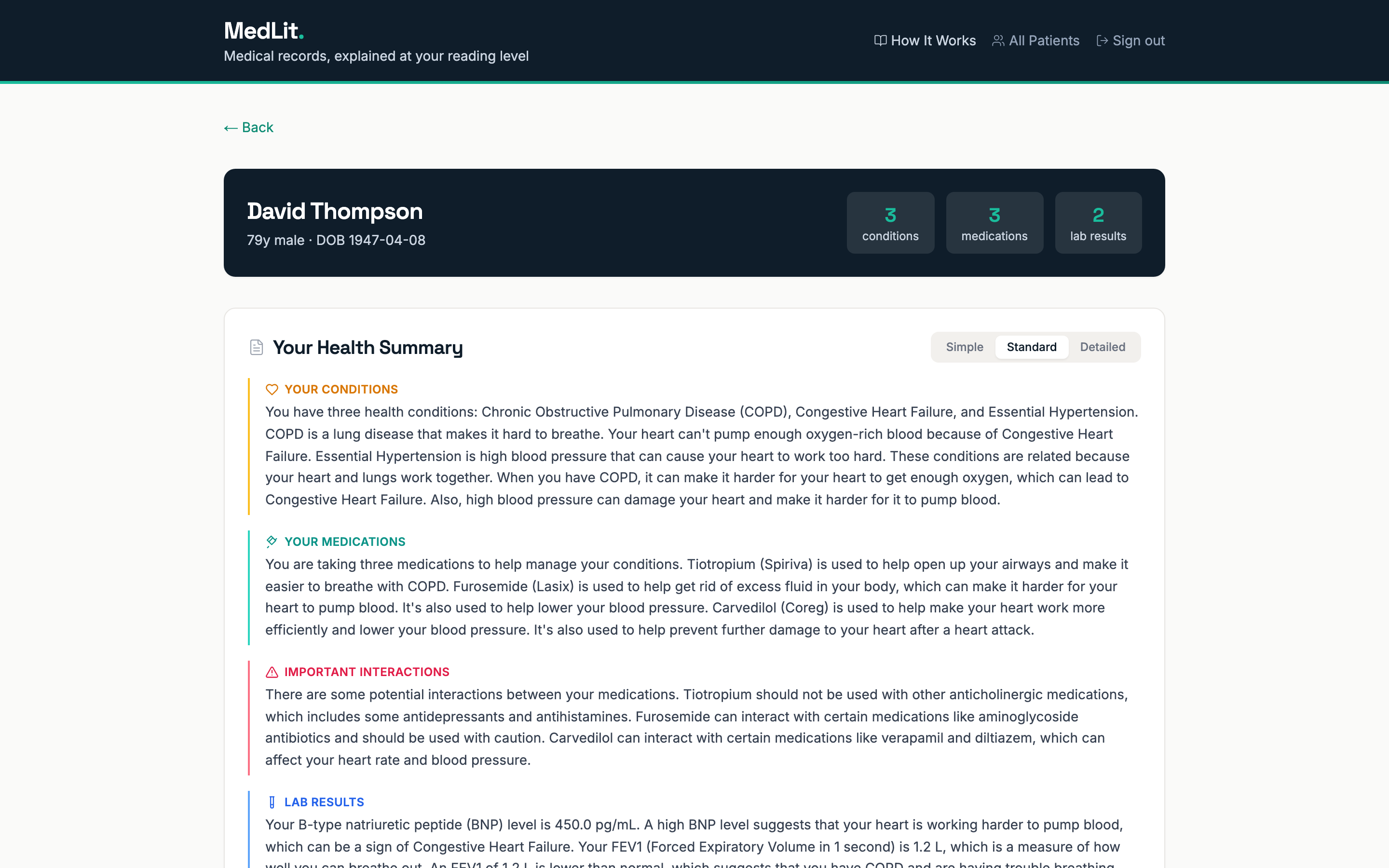
I built MedLit as graduate research in the same months six companies shipped the same architecture: a patient's FHIR record in, cited plain-language explanations out at a chosen reading level. Retrieval is keyed by the record's own codes, lab verdicts come from reference ranges, and the reading level is measured on the output.
| RxCUI | The record said | RxNav says |
|---|---|---|
| 1116634 | Tiotropium 18 MCG Inhalation Capsule | ticagrelor Oral Tablet |
| 73032 | Morphine 1mg IV | remifentanil |
| 198369 | Oxybutynin Chloride 5 MG Oral Tablet | torsemide 10 MG Oral Tablet |
Three of the seven findings from a ten-patient synthetic set. Check the first one yourself, no page of mine in between: RxNav’s raw answer for 1116634 →
04 · Open source
fhir-code-lint
3 miscoded drugs and 4 retired codes, caught before any user saw them
A physician reviewer caught MedLit citing the wrong drug. I went looking for the bug in my pipeline and found none: the synthetic record carried a code that resolves to a different medication. The validator I wrote out of that checks every coded value in a FHIR bundle against RxNav and MedlinePlus Connect, with JSON output and exit codes for CI.
Each artifact exists because the previous one’s data could not be trusted at face value.